


Dear Barbara,
My grandma just died in my arms. In her final moments, she made a horrible grimace, as if she were in terrible pain, and let out a guttural sound. Then she took a couple more breaths and was gone. It was so hard to watch.
The grimace, the last few breaths, the slowing pulse—this is how most people die. However, it is not how people die on television or in the movies. Unfortunately, the media has become our role model for what we expect dying to look like. When we don't see a final message and the eyes gently close, we—the watchers—think something bad or abnormal is happening.
Movies certainly do us a disservice by making dying look peaceful. Dying, in the hours, minutes—and sometimes even days—before death, is a struggle. The person works hard to get out of their body, to release their hold on living.
That labor and release is not necessarily pretty. It can be messy, with pee, poop, vomit, and mucus. It can be loud, with moans, grunts, congested breathing, gurgles, and rattles. There may be random words spoken that generally don't make sense. This is how most people die. Some people will experience everything I have outlined. A few will experience none of it, but most people will experience some, if not all, of what I have just described.
We are so conditioned to think people simply close their eyes and are gone that when we are truly with someone as they die, we think something bad is happening.
Like the labor of being born into this world, there is labor in leaving it. Just as we support a woman giving birth, we can support the person who is dying with our presence, our tender care, and our gentle words.
Something more... about why the last moments of life can look distressing ~
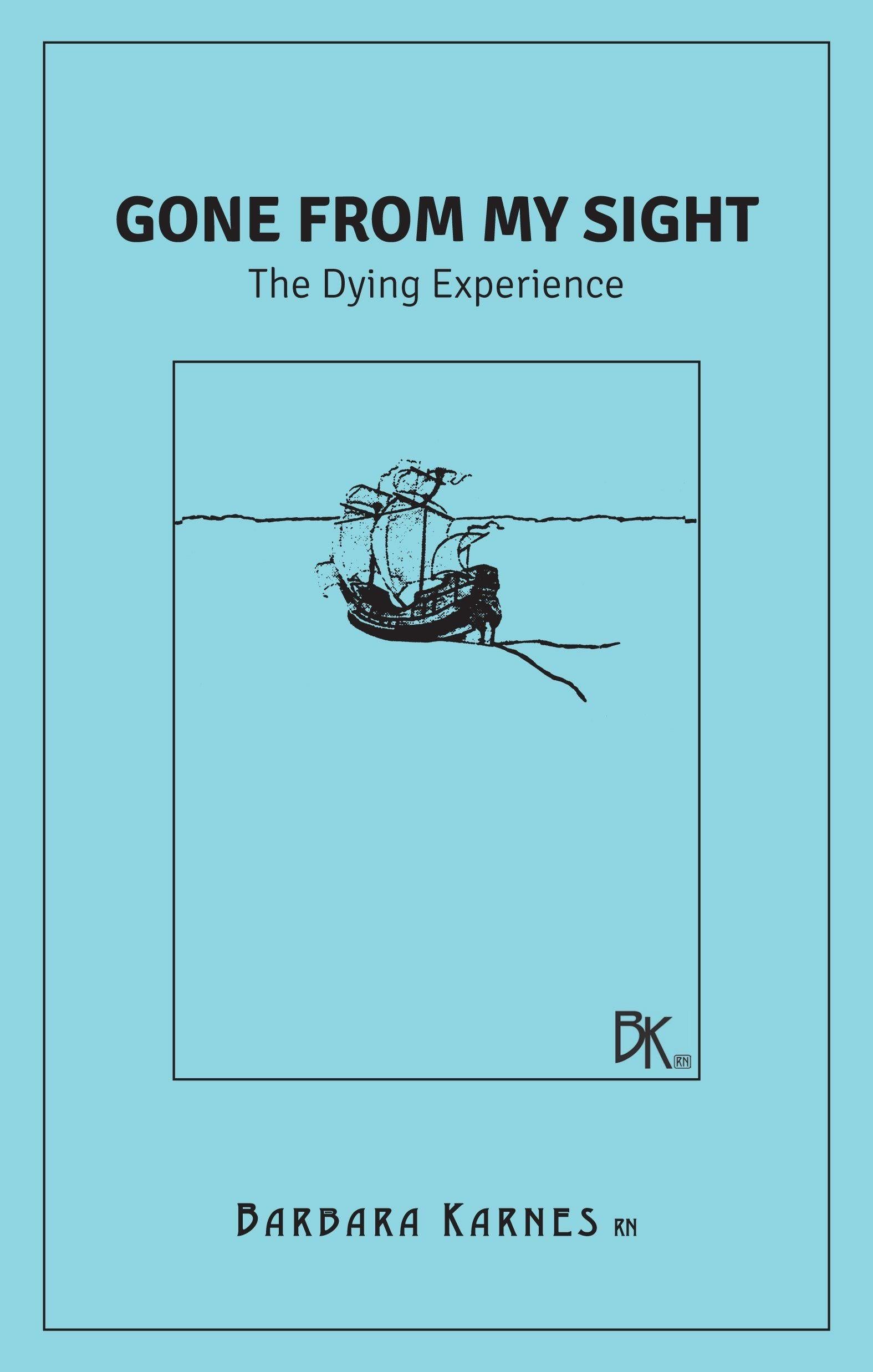
When you understand the dying process, you can spend less time wondering, "Is this normal?" and more time simply being present. Gone From My Sight explains the natural signs of approaching death, while its companion booklet, The Eleventh Hour, guides you through the final hours, the moment of death, and what comes immediately afterward. Together, they provide the knowledge you need to create a more sacred experience at the bedside.
6 comments
Chris
Thank you for all your teaching. I learned so much and was able to be present in the passing of both of my parents because of your books. Your work has been a blessing to me. Thank you so much.
———
BK Books replied:
You are welcome Chris. Blessings! Barbara
Thank you for all your teaching. I learned so much and was able to be present in the passing of both of my parents because of your books. Your work has been a blessing to me. Thank you so much.
———
BK Books replied:
You are welcome Chris. Blessings! Barbara
Matthew
After I retired I spent 22 months taking care of my mom. She wasn’t the easiest person to get along with as she could be quite self-righteous…if you didn’t believe what she believed you were just wrong. However, vascular dementia changed her. She became affectionate & we fell in love all over again. We healed a considerable amount of pain as well.
She was a very private person in many ways though she managed a successful Cajun restaurant until she was 84. Four days before she died her body started failing dramatically. She knew she was fading & was bent over with a mild shake. She began to ask me to make her well. After we talked about what was happening she went to sleep for 4 days.
The last day she began to do stokes breathing & that night she crossed over after I stepped out for a bit of fresh air. Hospice told me that people that are private tend to leave when they are alone. She had just curled up & crossed over. She was 93 1/2. Absolutely no regrets. We made our peace.
Thank God for Hospice…they taught me so much!
———
BK Books replied:
Matthew, thank you so much for sharing your experience of your mother’s approaching death and the positive help from Hospice. Sometimes people do their best work as their life is coming to an end and yes, we can protect our special person by taking our last breath when they are not present. Blessings! Barbara
After I retired I spent 22 months taking care of my mom. She wasn’t the easiest person to get along with as she could be quite self-righteous…if you didn’t believe what she believed you were just wrong. However, vascular dementia changed her. She became affectionate & we fell in love all over again. We healed a considerable amount of pain as well.
She was a very private person in many ways though she managed a successful Cajun restaurant until she was 84. Four days before she died her body started failing dramatically. She knew she was fading & was bent over with a mild shake. She began to ask me to make her well. After we talked about what was happening she went to sleep for 4 days.
The last day she began to do stokes breathing & that night she crossed over after I stepped out for a bit of fresh air. Hospice told me that people that are private tend to leave when they are alone. She had just curled up & crossed over. She was 93 1/2. Absolutely no regrets. We made our peace.
Thank God for Hospice…they taught me so much!
———
BK Books replied:
Matthew, thank you so much for sharing your experience of your mother’s approaching death and the positive help from Hospice. Sometimes people do their best work as their life is coming to an end and yes, we can protect our special person by taking our last breath when they are not present. Blessings! Barbara
Jean
Thank you for this thoughtful explanation. My mom has been living with me 6 years, she’s 99, and is just now bedridden, with a catheter, and eating from my hand. I’m facing reality.
———
BK Books replied:
Hi Jean, I suggest you get my booklets _Gone From My Sight _and The Eleventh Hour to use as a guide during this special time you will have with your mom. Blessings to you and your mom. Barbara
Thank you for this thoughtful explanation. My mom has been living with me 6 years, she’s 99, and is just now bedridden, with a catheter, and eating from my hand. I’m facing reality.
———
BK Books replied:
Hi Jean, I suggest you get my booklets _Gone From My Sight _and The Eleventh Hour to use as a guide during this special time you will have with your mom. Blessings to you and your mom. Barbara
Robyn S.
You don’t know how much I needed to hear this Barbara. I have spent the past four years worrying that my beloved husband may have been suffering in his final moments. From what I remember he sat up and straight forward towards me and made a horrible face, biting his tongue before laying back and passing. I’m not even sure he actually sat up and forward but I’ll definitely remember that face he made until the day I die. It was terrifying. I just pray that he was not in pain. I truthfully can’t say if that was immediately before he passed or if it was just sometime that same day. At any rate it still haunts me to this day.
———
BK Books replied:
Hi Robyn, what you described of your husband last hours is so very normal. He did a good job getting out of his body. It is hard work and that labor shows in our actions and facial expressions. Blessing to you. Barbara
You don’t know how much I needed to hear this Barbara. I have spent the past four years worrying that my beloved husband may have been suffering in his final moments. From what I remember he sat up and straight forward towards me and made a horrible face, biting his tongue before laying back and passing. I’m not even sure he actually sat up and forward but I’ll definitely remember that face he made until the day I die. It was terrifying. I just pray that he was not in pain. I truthfully can’t say if that was immediately before he passed or if it was just sometime that same day. At any rate it still haunts me to this day.
———
BK Books replied:
Hi Robyn, what you described of your husband last hours is so very normal. He did a good job getting out of his body. It is hard work and that labor shows in our actions and facial expressions. Blessing to you. Barbara
MARIA D'MARCO
Your last paragraph is the inescapable comparison I arrived at after several end-of-life experiences, mostly when all I had for support was your little blue book.
Death here is simply life on another level… it’s tough squeezing into the body, exiting the ‘safe’ womb, and then it’s tough pulling away from that body.
You are the champion, in my eyes, of bringing the reality of dying to the public.
The only end-of-life experiences that didn’t involve some of the ‘scary’ or surprising actions of the dying person were the two that were terminal and chose to choose their leaving time. These individuals, having spent time with family and friends, readying everyone for the coming loss, were allowed to slip quietly away - a final blessing they gave to those left behind.
——-
BK Books replied:
Hi Maria, thank you for sharing. Blessings! Barbara
Your last paragraph is the inescapable comparison I arrived at after several end-of-life experiences, mostly when all I had for support was your little blue book.
Death here is simply life on another level… it’s tough squeezing into the body, exiting the ‘safe’ womb, and then it’s tough pulling away from that body.
You are the champion, in my eyes, of bringing the reality of dying to the public.
The only end-of-life experiences that didn’t involve some of the ‘scary’ or surprising actions of the dying person were the two that were terminal and chose to choose their leaving time. These individuals, having spent time with family and friends, readying everyone for the coming loss, were allowed to slip quietly away - a final blessing they gave to those left behind.
——-
BK Books replied:
Hi Maria, thank you for sharing. Blessings! Barbara
Mareva
My Aunt was on Hospice and no one called me to tell me she was dying. I normally visited her 6 days a week. Felt I needed a break, Left March 25 and she died on morning of March 28 – husband found her dead. How did Hospice not tell me not to leave since she was on her dying path? It did not just suddenly happen. I did not get to hold her in my arms and she died alone!
———
BK Books replied:
Mareva, I’m so sorry Hospice did not prepare you for your aunt’s death. There are signs that would have guided everyone as to approaching death. However, the closest anyone can come to estimating a time of death is months, weeks, and days. Something to think about—-we have limited control over the time that we die. We can wait for someone to arrive or we can die when they are not present. Dying when our special person is not present is our gift of protection and love. You might write your aunt a letter, put you thoughts and feelings on paper. Tell her how much she means to you, how you feel with her gone—write whatever you would say to her if she were here. Burn the letter and scatter the ashes to the wind. Let how well you go on living be your gift to her. Blessings! Barbara
My Aunt was on Hospice and no one called me to tell me she was dying. I normally visited her 6 days a week. Felt I needed a break, Left March 25 and she died on morning of March 28 – husband found her dead. How did Hospice not tell me not to leave since she was on her dying path? It did not just suddenly happen. I did not get to hold her in my arms and she died alone!
———
BK Books replied:
Mareva, I’m so sorry Hospice did not prepare you for your aunt’s death. There are signs that would have guided everyone as to approaching death. However, the closest anyone can come to estimating a time of death is months, weeks, and days. Something to think about—-we have limited control over the time that we die. We can wait for someone to arrive or we can die when they are not present. Dying when our special person is not present is our gift of protection and love. You might write your aunt a letter, put you thoughts and feelings on paper. Tell her how much she means to you, how you feel with her gone—write whatever you would say to her if she were here. Burn the letter and scatter the ashes to the wind. Let how well you go on living be your gift to her. Blessings! Barbara