


I was a hospice nurse for a hospice that was just getting started. This was in 1985, when all hospices in the U.S. were just getting started. Part of our goal was to be with the patient and their family at the moment of death. To do that, we had an on-call, 24/7 system.
Now the thing about being on call in hospice is that most of the calls don’t really need a home visit. BUT if you don’t go, no matter the reason, you will probably find your patient in the ER by morning. Families are afraid, they need reassurance that nothing bad or abnormal is happening — hence home visits in the middle of the night.
One night, actually 3:00 in the morning, I got a call from a family saying that mom was “acting strange.” Once there I begin explaining what to look for as death approaches, that the “strange” things mom was doing were part of how we die. As I was talking, one of the daughters grabbed a paper and started taking notes. It struck me right then that she should not have to take notes. I should be able to give her written guidance. Guidance that would tell her what was happening and reduce some of the fear that surrounds dying. Information she and her family would have after I was gone.
That weekend I sat in my living room and wrote on yellow legal paper— there were no computers then — what I wanted families to know about dying. I then typed it out and started handing it out to the families I was caring for. BUT after a few times giving it to families, the list on paper felt cold, too medical, not personal enough, not comforting enough.
I rewrote the information to be in the form of a booklet. My goal was to have it simple enough that everyone would be able to understand it. That meant no medical terminology. I wanted it to be easy to read,so I used large print and I wanted it to be gentle. The topic was hard and scary. It needed to be gentle.
When the test copy finished, I took it to my hospice director, told him my reason for writing it, and asked him to print it in booklet form. He read it and said “no.” After some discussion, he said he didn’t want it, that it wouldn't be useful for the hospice. BUT he said that I could use it and do anything I wanted with it. I could print it myself if I felt that strongly about it.
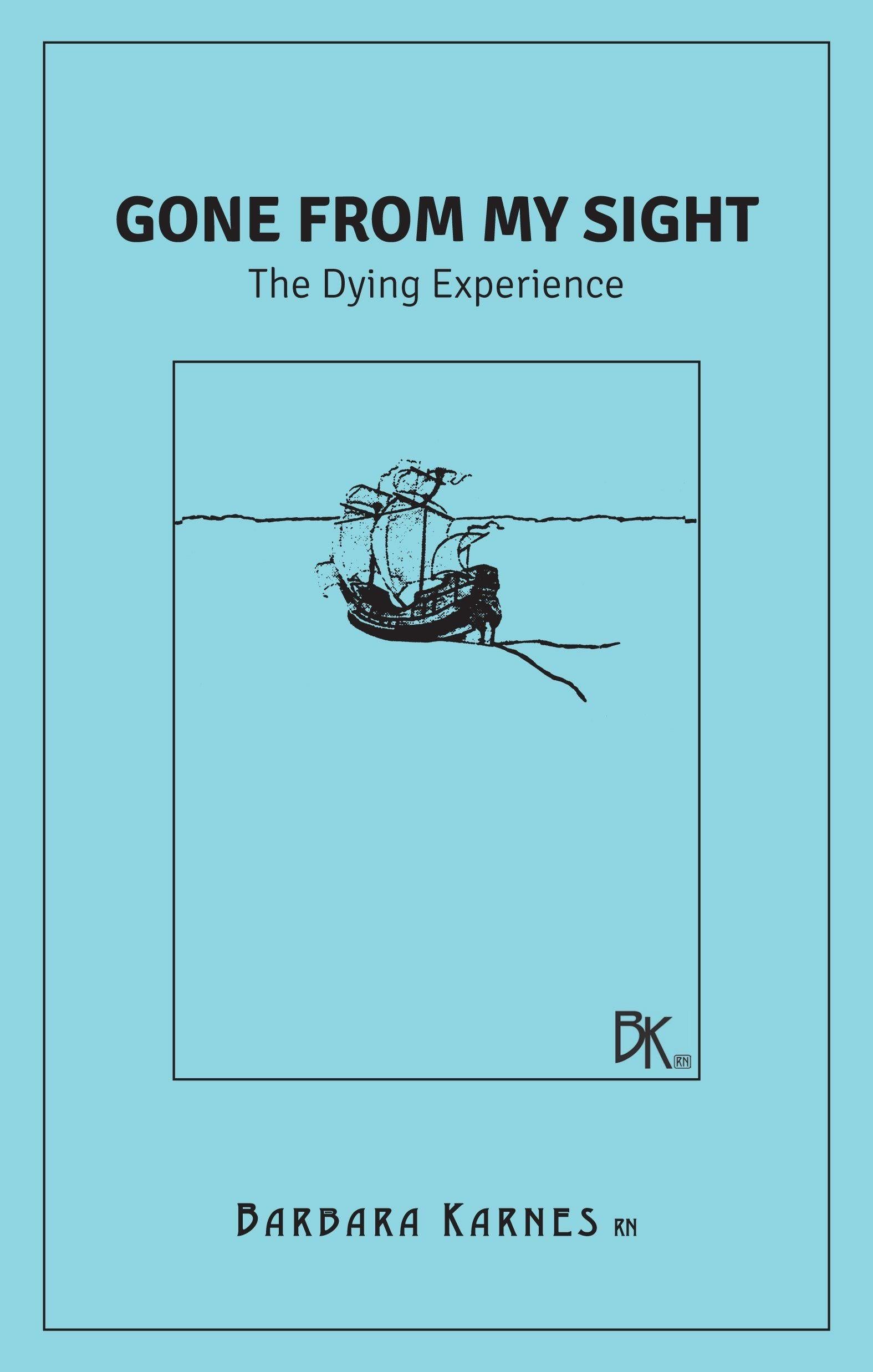
So I did. And titled it Gone From My Sight: The Dying Experience
Since writing "the little hospice blue book" I have answered other needs with other booklets. They are all in an essential bundle called The End of Life Guideline Series. If you are caring for someone approaching end of life, I encourage you support yourself and get this bundle.
18 comments
Dominique Larocque
Trust me, your books and incoming positive emails are wonderful…guiding me on my “path” as a thanadoula, accompanying families. BKRN energy I call it! Take great care.
———
BK Books replied:
Hi Dominique, “BKRN energy”. I love it! Blessings to you in your calling as a Thanadoula. Barbara
Trust me, your books and incoming positive emails are wonderful…guiding me on my “path” as a thanadoula, accompanying families. BKRN energy I call it! Take great care.
———
BK Books replied:
Hi Dominique, “BKRN energy”. I love it! Blessings to you in your calling as a Thanadoula. Barbara
Susan Gambetta
I was lucky enough to find the “little blue book” at the hospital where my S.O. was staying while hospice was prepping our home before transferring him there for home hospice. I was his caregiver during those last five emotional months and that booklet was read and reread numerous times during our journey. I was able to “walk him to the door” with a layman’s understanding of what was happening. I am so grateful to have had that tool to gently guide me through uncharted waters…
———
BK Books replied:
Hi Susan, I am pleased my booklet was a guide and comfort to you during the challenging time of caring for your husband. You are the reason I continue to offer guidance. Blessings to you! Barbara
I was lucky enough to find the “little blue book” at the hospital where my S.O. was staying while hospice was prepping our home before transferring him there for home hospice. I was his caregiver during those last five emotional months and that booklet was read and reread numerous times during our journey. I was able to “walk him to the door” with a layman’s understanding of what was happening. I am so grateful to have had that tool to gently guide me through uncharted waters…
———
BK Books replied:
Hi Susan, I am pleased my booklet was a guide and comfort to you during the challenging time of caring for your husband. You are the reason I continue to offer guidance. Blessings to you! Barbara
Teresa
I am a hospice nurse, I hand your little blue book to almost all of my patient’s families. I make a visit for the family and go over it with them, it is perfect, thank you.
———
BK Books replied:
Hi Teresa, when you said you don’t just hand a booklet to a family but “go over it with them” my heart smiled. In my mind that is how I see my booklets being used. Blessings to you in the great work you are doing. Barbara
I am a hospice nurse, I hand your little blue book to almost all of my patient’s families. I make a visit for the family and go over it with them, it is perfect, thank you.
———
BK Books replied:
Hi Teresa, when you said you don’t just hand a booklet to a family but “go over it with them” my heart smiled. In my mind that is how I see my booklets being used. Blessings to you in the great work you are doing. Barbara
Yolanda Valencia
I have purchased almost all your books IN PREPARATION for the loss of my close friends and family. When death is imminent, we are so overwhelmed. I feel better equipped to handle it, by having prior knowledge of the process of dying. Thank you!
———
BK Books replied:
Hi Yolanda, your words to everyone’s ears. Approaching death would be better understood and comfort found if we just knew ahead the normality of it. Blessings to you. Barbara
I have purchased almost all your books IN PREPARATION for the loss of my close friends and family. When death is imminent, we are so overwhelmed. I feel better equipped to handle it, by having prior knowledge of the process of dying. Thank you!
———
BK Books replied:
Hi Yolanda, your words to everyone’s ears. Approaching death would be better understood and comfort found if we just knew ahead the normality of it. Blessings to you. Barbara
Jennifer
This book meant the world to me while watching my lovely Mom die.
———
BK Books replied:
Hi Jennifer, I’m glad you found guidance and support during the time of your mother’s dying. Blessings to you. Barbara
This book meant the world to me while watching my lovely Mom die.
———
BK Books replied:
Hi Jennifer, I’m glad you found guidance and support during the time of your mother’s dying. Blessings to you. Barbara
Monica
I’m so glad you published your booklet, when my mom was dying I bought all your booklets and the information was priceless. I also had my young adult daughter read them and it truly made a BIG difference. My mom died at home and our hospice nurse was so sweet and kind, but we weren’t told all the information that was in your booklets. Thank you from the bottom of my heart, you made things easier for us
———
BK Books replied:
Thank you, Monica. I am pleased you read the booklet with your young daughter. Having the gentle knowledge takes some of the fear and confusion away. Blessings to you and your daughter. Barbara
I’m so glad you published your booklet, when my mom was dying I bought all your booklets and the information was priceless. I also had my young adult daughter read them and it truly made a BIG difference. My mom died at home and our hospice nurse was so sweet and kind, but we weren’t told all the information that was in your booklets. Thank you from the bottom of my heart, you made things easier for us
———
BK Books replied:
Thank you, Monica. I am pleased you read the booklet with your young daughter. Having the gentle knowledge takes some of the fear and confusion away. Blessings to you and your daughter. Barbara
Heidi Lorenz
I appreciate your apathy and sincerity for hospice patients I will say I was with Inspre Hospice in Georgia and the nurse never explained to me anything.. she gave me your book at the end of his life. She would always ask did he fall but I was never talked to about the process.. I feel lost No follow up nothing after he passed. I feel this hospice has failed me and my children.
———
BK Books replied:
Oh Heidi, I am so sorry for the lack of support and guidance you received, or should I say didn’t receive from Hospice. It’s not suppose to be like that. I’m glad they at least gave you my booklet. Blessings to you. Barbara
I appreciate your apathy and sincerity for hospice patients I will say I was with Inspre Hospice in Georgia and the nurse never explained to me anything.. she gave me your book at the end of his life. She would always ask did he fall but I was never talked to about the process.. I feel lost No follow up nothing after he passed. I feel this hospice has failed me and my children.
———
BK Books replied:
Oh Heidi, I am so sorry for the lack of support and guidance you received, or should I say didn’t receive from Hospice. It’s not suppose to be like that. I’m glad they at least gave you my booklet. Blessings to you. Barbara
Nikki
And then goodness you did!! I have a pile of them at home I regularly share :)
———
BK Books replied:
Hi Niki, Thanks for commenting. Blessings! Barbara
And then goodness you did!! I have a pile of them at home I regularly share :)
———
BK Books replied:
Hi Niki, Thanks for commenting. Blessings! Barbara
Yuko
Hi Barbara, your book helped me a lot when my dad was passing at home a few years ago. I’ve shared your book with some of my friends. Since I’m currently based in Japan, I hope your book will be translated into Japanese some time soon – Japan is one of the aging countries.
———
BK Books replied:
Thank you so much for sharing this. I’m very glad the book was helpful during your dad’s passing. We do have the book translated into Japanese and 12 more languages on our website. Please feel free to message us if you’d like help finding it. Blessings! Barbara
———
BK Books replied:
Hi Yuko,_ Gone From My Sight_ has been translated into Japanese. It was one of our earlier translations. Our office or website can give you details. It is in 12 languages. Blessings! Barbara
Hi Barbara, your book helped me a lot when my dad was passing at home a few years ago. I’ve shared your book with some of my friends. Since I’m currently based in Japan, I hope your book will be translated into Japanese some time soon – Japan is one of the aging countries.
———
BK Books replied:
Thank you so much for sharing this. I’m very glad the book was helpful during your dad’s passing. We do have the book translated into Japanese and 12 more languages on our website. Please feel free to message us if you’d like help finding it. Blessings! Barbara
———
BK Books replied:
Hi Yuko,_ Gone From My Sight_ has been translated into Japanese. It was one of our earlier translations. Our office or website can give you details. It is in 12 languages. Blessings! Barbara
Carol Alix
I buy your booklets and book The Final Act Of Living and give them to my friends as someone in their lives reaches the winter years or has a disease.
I know how much your booklets and book helped me with the loss of my best friend to cancer, loss of my brother to diabetes and loss of my Mom to old age.
Your have served your hospice calling so very well. Thank you
———
BK Books replied:
Hi Carol, I’m glad you found A Final Act of Living too. It’s a more detailed guide to end of life, still large print, no medical terms and gentle. It is for those that have more time and enrgy to read a book. Thanks for mentioning it. Blessings! Barbara
I buy your booklets and book The Final Act Of Living and give them to my friends as someone in their lives reaches the winter years or has a disease.
I know how much your booklets and book helped me with the loss of my best friend to cancer, loss of my brother to diabetes and loss of my Mom to old age.
Your have served your hospice calling so very well. Thank you
———
BK Books replied:
Hi Carol, I’m glad you found A Final Act of Living too. It’s a more detailed guide to end of life, still large print, no medical terms and gentle. It is for those that have more time and enrgy to read a book. Thanks for mentioning it. Blessings! Barbara
Mona Villarrubia
I worked as a hospice and hospital chaplain and found your booklets do very useful. We kept copies in the office and provided them when we felt it would be useful – families who were having a difficult time hearing what we shared with them. I’m retired and they have now become a personal and family resource. Thank you
———
BK Books replied:
Hi Mona, thank you for sharing. Blessings to you in the good work you are doing. Barbara
I worked as a hospice and hospital chaplain and found your booklets do very useful. We kept copies in the office and provided them when we felt it would be useful – families who were having a difficult time hearing what we shared with them. I’m retired and they have now become a personal and family resource. Thank you
———
BK Books replied:
Hi Mona, thank you for sharing. Blessings to you in the good work you are doing. Barbara
Michael Papligone
One year, and 153 days ago my wife passed away in hospice. They gave us the book Gone From My Sight. I am heartbroken. I wish I would have had the book sooner. I’m not healing, I’m hurting.
———
BK Books replied:
Oh Michael, grief is so hard to live with. You might read my grief booklet _My Friend, I Care. _Also look for a community grief support group—hospice, church, community. My blessings are with you during this challenging time of learning how to be a me instead of a we. Barbara
One year, and 153 days ago my wife passed away in hospice. They gave us the book Gone From My Sight. I am heartbroken. I wish I would have had the book sooner. I’m not healing, I’m hurting.
———
BK Books replied:
Oh Michael, grief is so hard to live with. You might read my grief booklet _My Friend, I Care. _Also look for a community grief support group—hospice, church, community. My blessings are with you during this challenging time of learning how to be a me instead of a we. Barbara
Nina Impala
Hi Barbara,
I never knew the whole story about how your little blue book came about. I just loved reading about it. Your work will go on and on and on. Thank you for all you do such a blessing.
———
BK Books replied:
Hi Nina, thank you for your kind words. Blessings to you! Barbara
Hi Barbara,
I never knew the whole story about how your little blue book came about. I just loved reading about it. Your work will go on and on and on. Thank you for all you do such a blessing.
———
BK Books replied:
Hi Nina, thank you for your kind words. Blessings to you! Barbara
Donna Gilbert
Thank you for your books.
Unfortunately I did not get it until my husband had passed. I highlighted all the things that happened as your book stated. I wish my hospice team would have had it to share with me at the time. EVERY hospice company should have them to share with the families. Thank you so much for all your books!!
———
BK Books replied:
Hi Donna, I know a bit of knowledge while death is approaching can be reassuring for caregivers and family. I’m sorry you did not have the information when you needed it most. Blessings to you! Barbara
Thank you for your books.
Unfortunately I did not get it until my husband had passed. I highlighted all the things that happened as your book stated. I wish my hospice team would have had it to share with me at the time. EVERY hospice company should have them to share with the families. Thank you so much for all your books!!
———
BK Books replied:
Hi Donna, I know a bit of knowledge while death is approaching can be reassuring for caregivers and family. I’m sorry you did not have the information when you needed it most. Blessings to you! Barbara
Jenni
Thank you so much for all your writings and teachings. They were so helpful when my mom was dying and I continue to follow your work. It’s always such a comfort. Thank you for what you do!
———
BK Books replied:
Hi Jenni, I’m glad my booklets were supportive for you while caring for your mom. I hope you also read My Friend, I Care. It is my grief booklet. Blessings! Barbara
Thank you so much for all your writings and teachings. They were so helpful when my mom was dying and I continue to follow your work. It’s always such a comfort. Thank you for what you do!
———
BK Books replied:
Hi Jenni, I’m glad my booklets were supportive for you while caring for your mom. I hope you also read My Friend, I Care. It is my grief booklet. Blessings! Barbara
Polly Sears
As I have aged,and, having worked for Hospice, I find your advice-ie:booklets, invaluable. It actually helps me prepare for my final days. I have MS, still doing well, but, one never knows.
Thank you so much for your caring, thoughtful explanations.
I particularly like your comparing the process of being born with dying. It makes so much sense!
Sincerely, Polly Sears
———
BK Books replied:
Hi Polly, Thank you for your words about my booklets. I’m glad they gave you guidance as you did end of life work. My blessings to you on your MS journey. Barbara
As I have aged,and, having worked for Hospice, I find your advice-ie:booklets, invaluable. It actually helps me prepare for my final days. I have MS, still doing well, but, one never knows.
Thank you so much for your caring, thoughtful explanations.
I particularly like your comparing the process of being born with dying. It makes so much sense!
Sincerely, Polly Sears
———
BK Books replied:
Hi Polly, Thank you for your words about my booklets. I’m glad they gave you guidance as you did end of life work. My blessings to you on your MS journey. Barbara
Sarah Messmer
Barbara,
I love your hospice “blue book”!
Sarah
———
BK Books replied:
Thank you Sarah. Blessings! Barbara
Barbara,
I love your hospice “blue book”!
Sarah
———
BK Books replied:
Thank you Sarah. Blessings! Barbara
Joanie Graham
I’m with Anchor of Hope Hospice in Plano Tx.
We hand the Blue Book out to our patients and it really helps them!
We also give to our volunteers during orientation.
Thank you for the dedication you have put into these books.
Warm Regards,
Joanie Graham
———
BK Books replied:
Hi Joanie, thank you for the kind words about my materials. Blessings to you and the work you and your hospice are doing. Barbara
I’m with Anchor of Hope Hospice in Plano Tx.
We hand the Blue Book out to our patients and it really helps them!
We also give to our volunteers during orientation.
Thank you for the dedication you have put into these books.
Warm Regards,
Joanie Graham
———
BK Books replied:
Hi Joanie, thank you for the kind words about my materials. Blessings to you and the work you and your hospice are doing. Barbara