
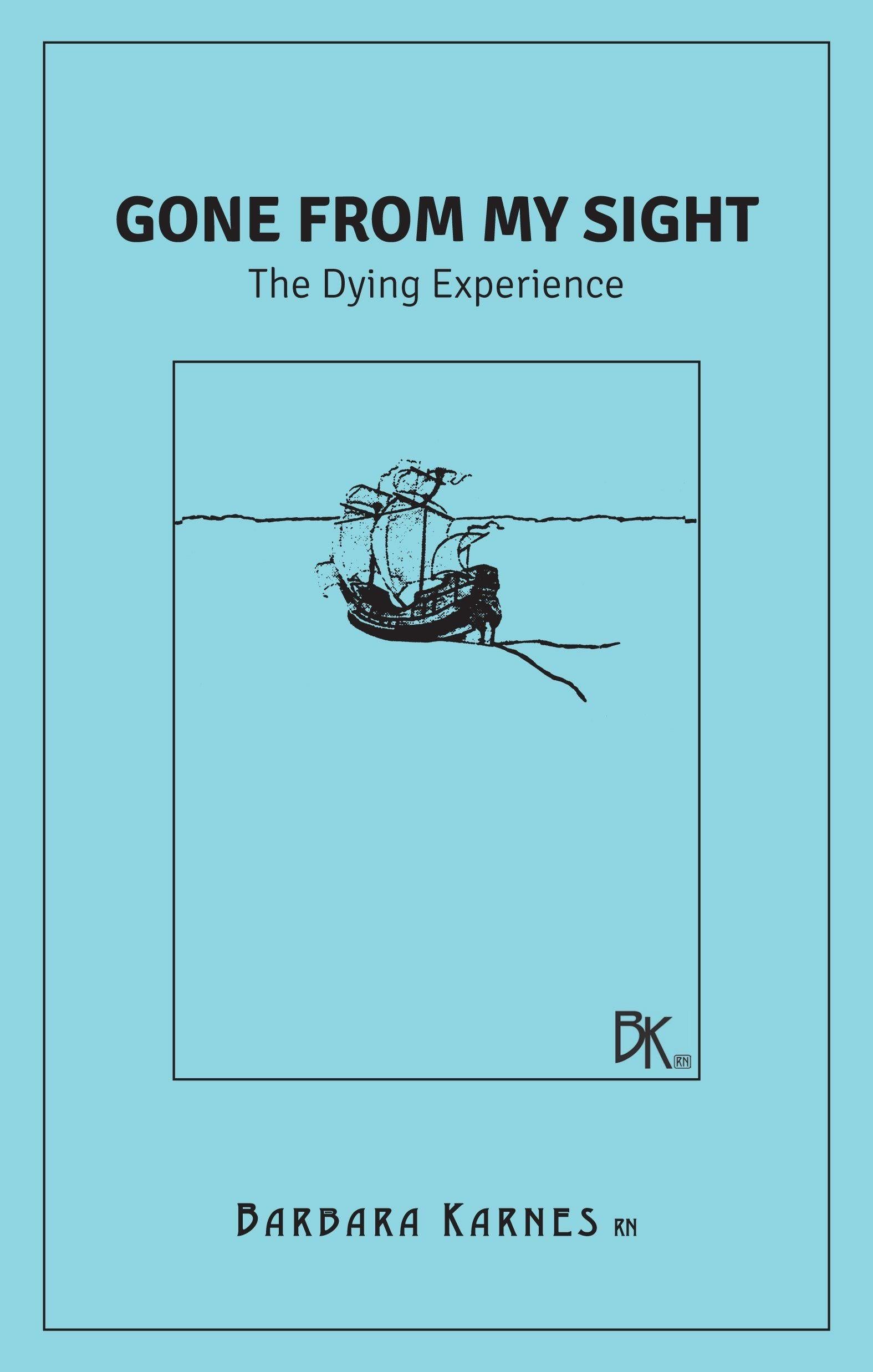


Dear Barbara, As a new hospice RN, I would like to thank you for your contribution to hospice. Your booklet Gone From My Sight was so touching to read and gives my patients' families so much comfort. I am sure you are a very busy woman, but if you have any advice for a new hospice RN, it would be greatly appreciated. After working in several areas of nursing, I truly feel that hospice is my calling, and I want to do it right.
Welcome to the world of hospice nursing and to finding your special place. So few people find that place anymore. For too many, a job is simply a paycheck. How lucky you are to have found both.
I don't know about advice, but I'll give you something to think about. My philosophy is that end-of-life care is not about medical interventions, treatments, procedures, pills, or morphine. End-of-life care is about teaching, guidance, support, and nurturing. It is about reassuring families that nothing bad is happening, that their loved one is doing exactly what a person who is dying does, and that they are doing a good job caring for that person. End-of-life care is about neutralizing the fear everyone brings to this experience—the patient and the family.
How do we neutralize fear? By teaching the normal process of dying , by encouraging them in the care they are giving, being available, and bonding with them. Only by building that relationship can you earn their trust and guide them through this unfamiliar experience.
That is why continuity of care is so important. Families can't build trust if every nurse they see is different—and that is happening in far too many agencies.
Your key teaching areas will be around eating and not eating. Explain why the body doesn't want the food. Do the same with hydration. Being dehydrated is like going to sleep and not waking up, a normal and part of the natural process.
You will teach mouth and skin care, bowel management and explain why the patient is withdrawing and sleeping more.
If pain is an issue, teach families that we are experts in comfort management and why addiction or overdosing are not concerns at this stage of life.
Remember that dying is not painful. It is disease that causes pain, so if pain is not part of the disease history, there is usually no need for high doses of pain medicines at end of life. A very small amount of morphine often helps ease shortness of breath.
If you teach your families well about approaching death they will better understand the labor of dying. Having someone you care about dying is very sad but it doesn’t have to be a bad experience. It is our job to see that their experience is a sacred one.
As I write this I realize I could go on and on. I recommend that you read The Final Act of Living: Reflections from a Longtime Hospice Nurse and watch my DVD New Rules For End of LIfe Care. It includes Gone From My Sight and its companion booklet The Eleventh Hour. They will both be helpful in your work with families.
Blessings to you in the work that you are doing!
2 comments
Janet
By choosing to enter a deep place of peace, and staying there, a person can help others stay in this place of comfort. It’s like from peace, a person is much more able to be aware of the “opening of the gates of perception” to experience the spiritual experiences that come at this time.
Yes, the absence of fear…. “Fear not!” The angels in the Bible say! It’s true.
By choosing to enter a deep place of peace, and staying there, a person can help others stay in this place of comfort. It’s like from peace, a person is much more able to be aware of the “opening of the gates of perception” to experience the spiritual experiences that come at this time.
Yes, the absence of fear…. “Fear not!” The angels in the Bible say! It’s true.
Janet
Thank you for your help. Comfort is the most important part of this transition process. Comfort for family, comfort for the person passing.
I’ve been amazed at how often family members who have separated themes sometimes come together to reconnect at this time, ant the one making the change waits for the whole process to come together!
———
BK Books replied:
Hi Janet, I do believe we have limited control over the time that we die. The bedside of the dying is an opportunity for resolution, coming together, making amens. A gift if we use it. Blessings! Barbara
Thank you for your help. Comfort is the most important part of this transition process. Comfort for family, comfort for the person passing.
I’ve been amazed at how often family members who have separated themes sometimes come together to reconnect at this time, ant the one making the change waits for the whole process to come together!
———
BK Books replied:
Hi Janet, I do believe we have limited control over the time that we die. The bedside of the dying is an opportunity for resolution, coming together, making amens. A gift if we use it. Blessings! Barbara