


A couple months ago, She Rises Magazine asked for women to answer this question, "What Will Be Your Greatest Legacy?" Such a great idea to ponder. As an exercise, I wrote a response and sent it in. I'm flattered that they published it.
Helping People Have a Sacred End of Life Experience
By Barbara Karnes, RN Hospice Pioneer
In the 1960s, a woman's career choices were between a nurse, teacher, secretary, or marriage. I chose nursing, but upon graduation realized I made a huge mistake. I should have never been a nurse - maybe a social worker - but nursing wasn't for me. So - I got married and raised a family.
In the 1970s, Elizabeth Kuebler-Ross brought the public's attention to how Americans were not caring for their dying very well. I was interested, intrigued, and wanted to know more. At the same time, the concept of hospice - a place where the dying could go and be cared for - arrived in the US from England. An interest in me was sparked!
I took a refresher course in nursing and went to work as a hospice nurse. Over the years I have worn many hats in the end of life field. From my original post of nursing at the bedside of the dying during the AIDS epidemic, to the director and administrator of two hospices, to giving workshops nationwide on caring for people at end of life, to webinars and podcasts — I've educated on end of life care and grief from many perspectives. Now, 43 years later, I am still active in the end of life field as an author and speaker.
As I look back, I think one of the gifts I brought to end of life care is that I did not have any nursing experience in a standard hospital. I did not know how our medical model took care of people that were dying. I had to be creative in my care. We didn't really understand dying or what to do while it was approaching. The many patients I had over the years I did direct patient care all died. I know that sounds strange to say so plainly. But their dying experiences and my figuring out how to care for them taught me how people really die, which is not at all like it is in the movies.
I see my greatest legacy in the booklets I have written — booklets on signs of approaching death, on pain management, dementia care, on what to do in the hours before, during and after death and the grief experience
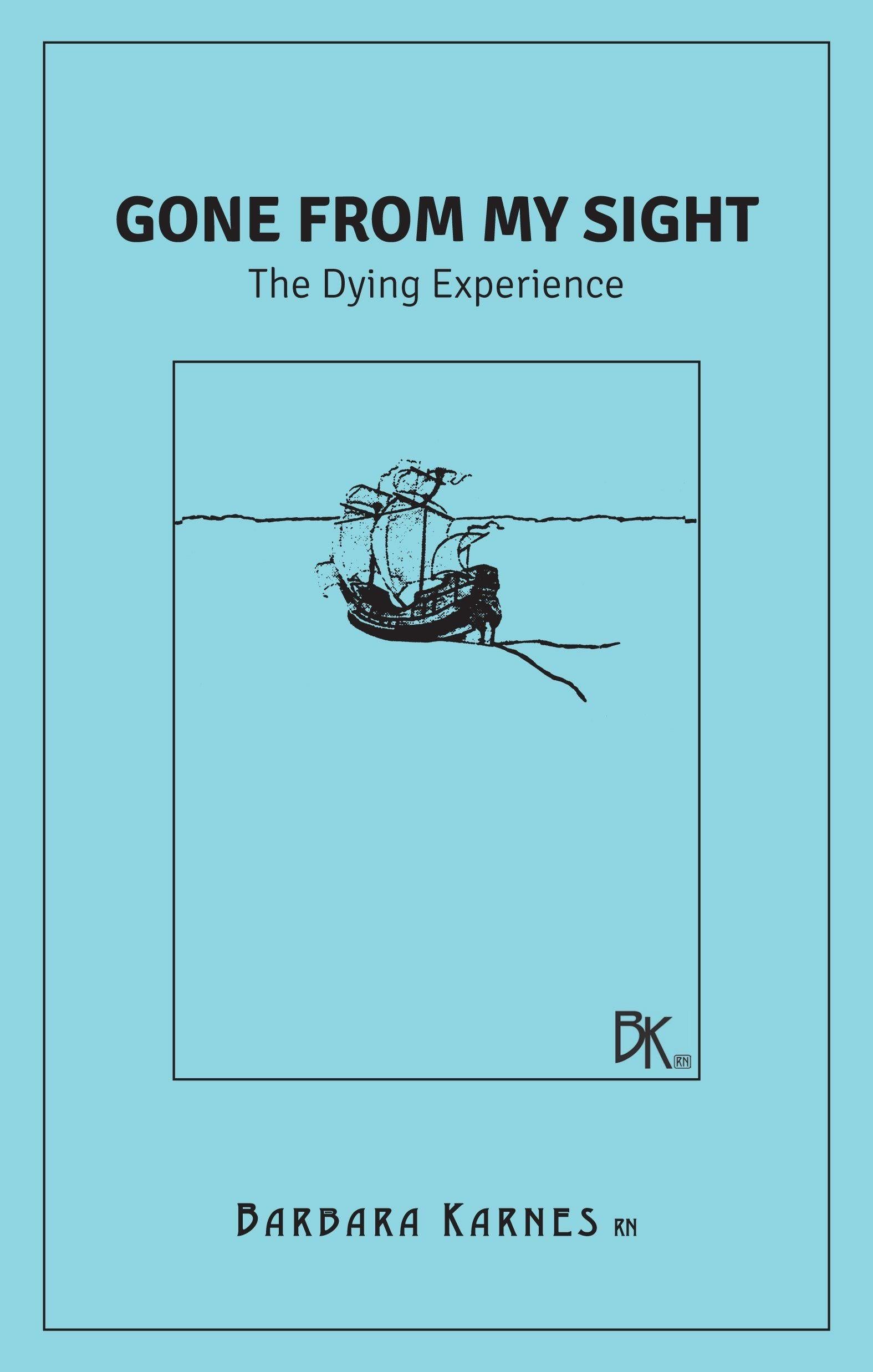
One night in the early 1980s - actually, at 3 AM - I was called to a home by one of my hospice family’s who were quite frightened. As I was explaining what and why their dying mom was doing what she was doing, one of the daughters began taking notes. I thought she should not have to be doing this. She needed something to guide her, something gentle, short, easy to read in this challenging time. That weekend I wrote Gone From My Sight, The Dying Experience, a small, 14 page booklet.
That is my legacy. 40 million copies, and counting, have found their way around the world. Think of how many people have had the guidance and support of that little booklet.
How do you balance ambition with purpose? My work has not been about ambition. My life and work has just unfolded in front of me without my even realizing what was happening or the degree of the impact.
What impact matters most to you now? How this important work will continue when I am no longer here to be part of it. The way we care for people that can't be fixed will change and evolve, but how they die, how their body approaches death, will remain the same. We are born, we experience and then we die — that is the cycle of life. Humanity can always benefit from the knowledge of how our body dies. We, the watchers, the caregivers, can always benefit from guidance and support on what to do while it is happening to someone we love. There is my legacy, my purpose, what matters most — providing that knowledge and guidance so that people may have sacred end of life experiences.
Connect With Barbara


3 comments
John
Barbara,
I have followed you since I was with my brother as his hospice at home caregiver. Given the short time he had, we were together 41 days and nights, before he went home to the lord.
You’ve done excellent vital information for this calling/task for me, all of us family caregiver’s to learns of the process of hospice and the dying of a loved one, it is your Little Blue book that made a huge difference for me.
(Hospice care gave me the book, I others then learned from it,)
Gone From My Sight, The Dying Experience – I was able to begin to ‘try’ to understand it all, and I then saw the signs of the dying process up til the end, the Little Blue had me open my eyes to see.
Then I saw the metaphor. After my brother’s passing, he was was gone from my sight, while getting my own reprise, daily I saw a large ship, a tanker, up large and up-close and then ride off into the ocean, gone from my sight but forever large in my sight just they had been. Thank you for your wonderful work This is a wonderful legacy that will continue to teach others as a standard. Well Done!
———
BK Books replied:
Hi John, I am glad my booklet was helpful for you during the time of caring for your brother. I, also, love the poem, _Gone From My Sight, _that is at the end of my booklet. Has a comforting feel to it. Blessings to you. Barbara
Barbara,
I have followed you since I was with my brother as his hospice at home caregiver. Given the short time he had, we were together 41 days and nights, before he went home to the lord.
You’ve done excellent vital information for this calling/task for me, all of us family caregiver’s to learns of the process of hospice and the dying of a loved one, it is your Little Blue book that made a huge difference for me.
(Hospice care gave me the book, I others then learned from it,)
Gone From My Sight, The Dying Experience – I was able to begin to ‘try’ to understand it all, and I then saw the signs of the dying process up til the end, the Little Blue had me open my eyes to see.
Then I saw the metaphor. After my brother’s passing, he was was gone from my sight, while getting my own reprise, daily I saw a large ship, a tanker, up large and up-close and then ride off into the ocean, gone from my sight but forever large in my sight just they had been. Thank you for your wonderful work This is a wonderful legacy that will continue to teach others as a standard. Well Done!
———
BK Books replied:
Hi John, I am glad my booklet was helpful for you during the time of caring for your brother. I, also, love the poem, _Gone From My Sight, _that is at the end of my booklet. Has a comforting feel to it. Blessings to you. Barbara
Sandy Jensen
Excellent! Your guidance is much appreciated. Thank you.
———
BK Books replied:
You are welcome, Sandy. Blessings! Barbara
Excellent! Your guidance is much appreciated. Thank you.
———
BK Books replied:
You are welcome, Sandy. Blessings! Barbara
Mo Willis
This is most definitely an amazing legacy that has and will continue to go on much as ripples from a single pebble times thousands!! I know I have personally purchased hundreds of your very user-friendly pamphlets for friends, family, coworkers and clients. I’m still amazed that not every hospice provider uses them!
Well done, faithful friend!
———
BK Books replied:
Hi Mo, I really like your analogy of the ripples in a pond. Thanks for sharing and being a part of the BK Books family of providers. Blessings to you in the work you are doing. Barbara
This is most definitely an amazing legacy that has and will continue to go on much as ripples from a single pebble times thousands!! I know I have personally purchased hundreds of your very user-friendly pamphlets for friends, family, coworkers and clients. I’m still amazed that not every hospice provider uses them!
Well done, faithful friend!
———
BK Books replied:
Hi Mo, I really like your analogy of the ripples in a pond. Thanks for sharing and being a part of the BK Books family of providers. Blessings to you in the work you are doing. Barbara